 Journey with Junyuan
JapanAsia
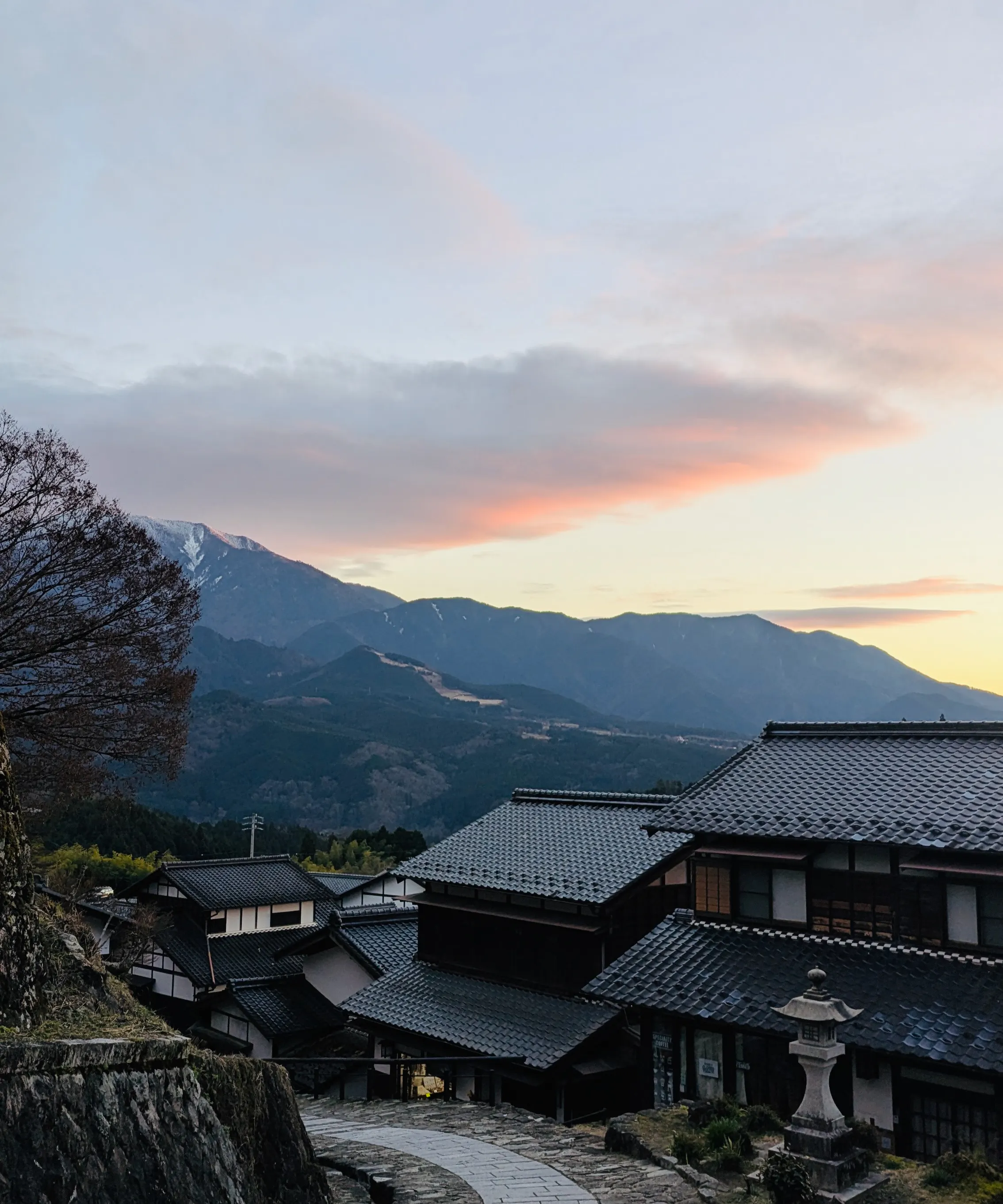
Tucked between the mountains of central Japan, the Kiso Valley is one of the best places to experience a slower, more traditional side of the country. Following the Nakasendo Trail — a historic Edo-period route that once connected Kyoto and Edo (modern-day Tokyo) — this region offers a rare chance to quite literally walk through history. Once travelled by samurai and merchants, the trail is now one of Japan’s most iconic walks, loved for its peaceful scenery, well-preserved paths, and the sense of stepping into another time.
Along with Gujo Hachiman, the Kiso Valley became a highlight of my Japan trip — a place where history blends seamlessly with nature, and where I could soak in the atmosphere in quiet stillness. While many visitors come to the Nakasendo post towns like Tsumago or Magome as a quick day trip, staying overnight is what truly makes the experience special — as the crowds fade, the lanterns glow softly, and the towns settle into a calm that feels worlds away from modern life.
~~~
The Kiso Valley is easily accessible by train from major cities:
Most travellers begin at Nagiso and walk toward Magome, passing through Tsumago along the way.
~~~

Tsumago-juku


One of the most rewarding ways to experience the Kiso Valley is by walking a section of the Nakasendo Trail, where history and nature unfold quietly around you.
The most popular stretch runs between Tsumago-juku and Magome-juku, covering around 8 km and taking 2–3 hours at a relaxed pace. The route is well-paved, clearly signposted (in both Japanese and English), and easy to follow, making it accessible even if you’re not an experienced hiker. As I took the train from Nagoya to Nagiso, I started my walk directly from Nagiso Station, which adds an extra 3–4 km (~45–60 minutes) to reach Tsumago before continuing on to Magome. This makes the full route roughly 11–12 km in total, taking 4–5 hours depending on pace.
You can walk this section in either direction. From Tsumago to Magome, there’s a gentle uphill incline, especially in the second half, though it’s nothing too strenuous. Walking the opposite way (Magome → Tsumago) is slightly easier overall, with more downhill sections.
Along the way, the trail winds through forests, past traditional wooden houses, small shrines, waterfalls, and occasional rest stops — offering a peaceful, immersive journey through rural Japan.
As I went at the end of December, this was something I had looked into carefully beforehand.
While I experienced a lot of snow in Nagano and Takayama, the Kiso Valley was mostly clear, with only a few icy patches along the trail here and there. Mountain weather can be unpredictable, though, so it’s worth bringing crampons or traction spikes just in case. 🧊
Tsumago to Magome is the most popular part of the Nakasendo Trail, and while foot traffic was extremely low when I went, my B&B host told me it was still very busy from early to mid December! So as long as you're sticking to the path you should be fine. There are bear bells installed at various points along the trail to help alert wildlife to your presence. It’s a good idea to give them a ring as you pass by. 🔔
~~~

Sunset in Magome-juku


The historic post towns of Tsumago-juku and Magome-juku are beautifully preserved, offering a glimpse into life during the Edo period.
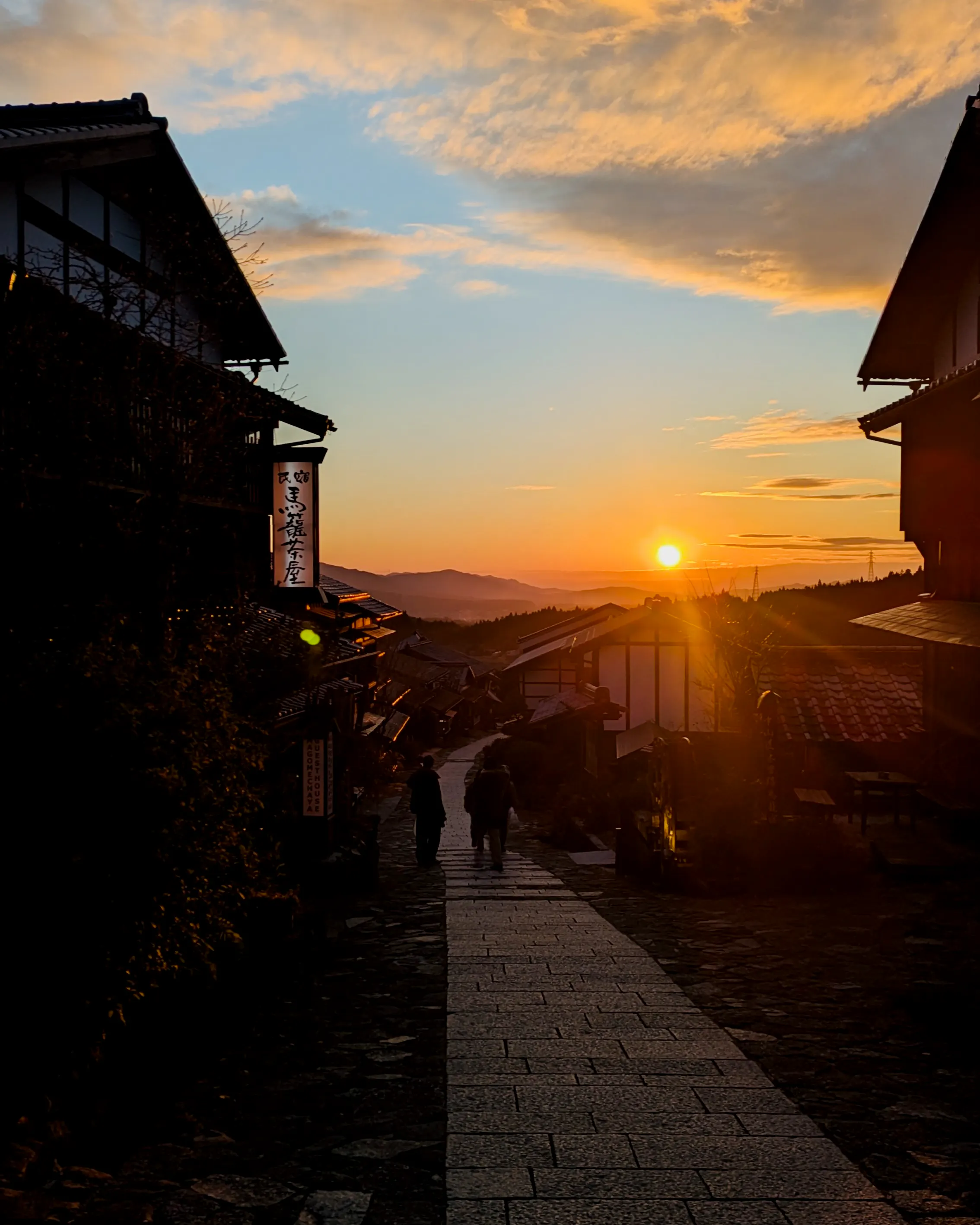
While the two share a similar atmosphere — both authentic, serene, and steeped in history — I found myself slightly preferring Magome. Set on a hillside, it opens up to sweeping views over the valley and surrounding mountains, which feel especially magical at sunset. There are a couple of scenic viewpoints worth seeking out, including the Magome Jinbakami Observatory and a lovely spot near the town square, by the watermill and stone lantern.
That said, both towns are incredibly atmospheric, with narrow lanes, wooden inns, and traditional eateries and shops. Be sure to try some local specialties along the way — soba noodles, gohei mochi, and chestnut pastries are all worth a stop!

Quiet and tranquil night time in Magome


~~~
Staying overnight in one of the post towns is what truly elevates the experience.
I stayed at Sakanomichi in Magome, a lovely B&B with beautiful views and the warmest hosts. Whether you choose Tsumago or Magome, spending a night here allows you to experience the towns at their quietest.
If you want to experience the Nakasendo at its most immersive and have the budget for it, BYAKU Narai is worth knowing about. It's a small luxury hotel in Narai-juku (one of the most beautifully preserved post towns on the trail), housed across 4 restored Edo-period buildings, each different. Your stay includes dinner and breakfast in a converted sake brewery storehouse, a private bath, and a guided tasting at the suginomori brewery next door — which has been making sake here since 1793. It holds a MICHELIN Key, and the whole thing is bookable as a private experience through Wabunka.
As evening falls, the lanterns begin to glow softly and the day-trippers drift away. The following morning is just as special — waking up to mist hanging over the mountains, with a stillness that’s hard to find elsewhere.
On my second day, I continued walking from Magome to Nakatsugawa before taking the train back to Nagoya on the Shinano Line.
This section is around 8km and takes roughly 2-3 hours. It's less scenic than the main Nakasendo stretch, gradually transitioning into a more urban setting, alternating between residential areas and busier roads in the second half. If you’re short on time, you could skip this part and take a bus to Nakatsugawa.
~~~
The Kiso Valley offers something rare in modern travel — a chance to slow down and move through a landscape shaped by history, nature, and tradition. Walking the Nakasendo Trail isn’t just about ticking off sights; it’s about experiencing the rhythm of the journey itself.
If you’re looking to add a quieter, more reflective chapter to your Japan itinerary, this is one of the most rewarding places to do it.
👉 Explore the complete 2-week Japan itinerary here
~~~~~~