 Journey with Junyuan
JapanAsia
Japan had already captured my heart on a visit 13 years ago, when I explored the classics — Tokyo’s energy, Kyoto’s temples. This time, I wanted something different: less neon, fewer crowds, and more time in nature. I was craving mountains, quiet towns, long forest walks, and those moments when shrines appear almost unexpectedly along the path.
This 2-week Japan itinerary through Central Honshu became exactly that. Over two weeks, I followed historic trails, wandered through temple towns, soaked in alpine onsen scenery, and explored regions that felt deeply rooted in tradition yet wonderfully unrushed. From snow-dusted mountain villages and sacred routes like the Nakasendo Trail to coastal towns and rural valleys, this itinerary offers a nature-focused alternative to the classic Tokyo–Kyoto–Osaka route.
If you’re planning a Japan winter itinerary, returning for a second trip, or simply looking for a slower, more off-the-beaten-path experience, this guide is for you.
Winter in Japan is deeply underrated. While many travellers focus on cherry blossom season or autumn foliage, the period from late December and February offers something quieter and more intimate.
Yes, it’s cold — but if you enjoy layering up and being outdoors, winter adds a kind of magic that’s hard to replicate at any other time of year.
This route forms a loose loop through Central Honshu, connecting Tokyo with the Japanese Alps and back again:
Note: I started the trip in Hakone because it was easier to book an onsen ryokan at a reasonable price around those days, though logistically it might make more sense to visit Hakone toward the end, since the Shinkansen from Nagoya to Tokyo passes through Odawara. If you land in Tokyo earlier, you could head straight to Nagano first, finishing the trip with Kiso Valley — Hakone — Kamakura.
Landing at Tokyo Haneda around 6 pm, I overnighted in Yokohama for convenience. I stayed at JR East Mets Yokohama, right by the station — clean, reasonably priced, and surrounded by eateries for your first meal. 🍜 My favourite touch was free bath salt sachets in the lobby, which was so perfect after a long flight! 🫧
~~~

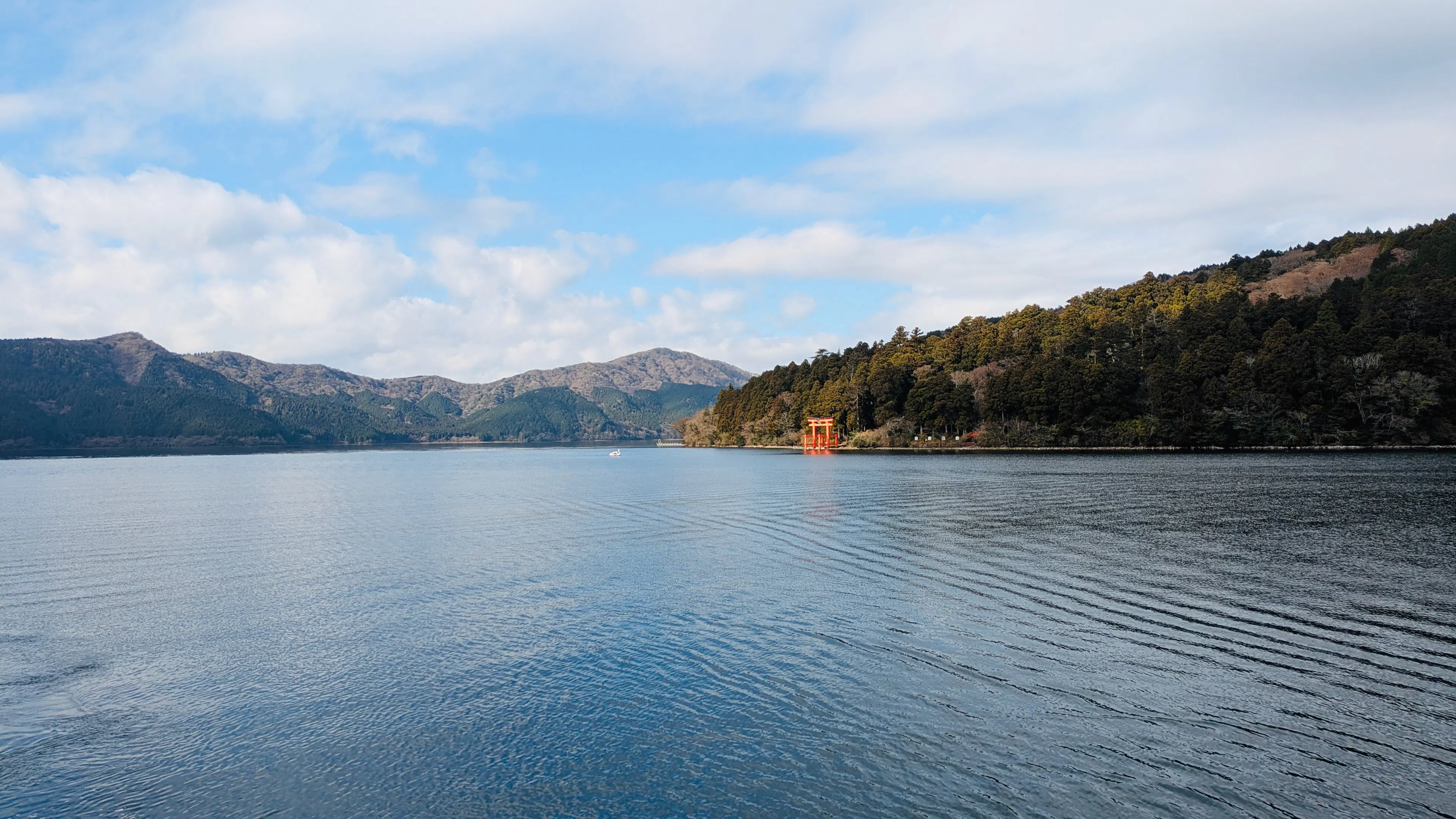
Lake Ashi feat. Hakone Shrine


Hakone is such a wonderful place to start or end a trip in Japan. It's a scenic escape into nature, offering relaxing stays at ryokans and slow hours enjoyed in hot spring baths. ♨️
Many people stay around Hakone Yumoto area, but I stayed in quieter Gora, which is right in the mountains and on the Hakone Ropeway with access to Owakudani and Lake Ashi. I spent 1 night in Tensui Saryo, a ryokan 2 minutes away from Gora station. I stayed in a room in their new annex, which was beautifully furnished and had a private onsen bath on the terrace with a stunning mountain view. 🥹 Both the kaiseki dinner and breakfast were delicious and quite an adventure on their own! 🤤 I felt so relaxed from my stay there and I wish I had stayed for longer, as there's so much to do and to enjoy in Hakone.
👉 Read the more detailed guide on 2 days in Hakone.
~~~

Cedar avenue leading to Togakushi Shrine


Nagano makes an easy and scenic escape from Tokyo, just around 1.5 hours on the Hokuriku Shinkansen. Once a Winter Olympics host city, it’s now best known as a gateway to the Japanese Alps, surrounded by mountains, forests, and some of central Japan’s most atmospheric landscapes. While Nagano city itself is pretty small, it serves as the perfect base to explore the surrounding areas.
Most of Nagano's hotels have a 90s vibe still, but a lot of them are in the vicinity of the train and bus station with abundant food options nearby. I stayed at Hotel JAL City Nagano for 3 nights and loved it there. It's quiet while still being close to everything, but the absolute highlight is their delicious breakfast buffet on the top floor with 180° view of the Japanese Alps! 🗻
👉 Read the more detailed guide on 3 days in Nagano.
~~~

Gyokusen-inmaru Garden


From Nagano, I continued to Kanazawa, a city that balances elegance and ease beautifully. It was an easy 90 mins ride on the Hokuriku Shinkansen that took me to the other side of the alps and the coastline of the Japan Sea.
Kanazawa is a compact, walkable city, and I based myself at Tokyu Stay Kanazawa, which ended up being the most affordable stay during my Japan trip, yet incredibly high up there in terms of quality! My room came with a washer-dryer which was such a bonus. The area just west of the castle complex is especially convenient, with plenty of hotels, shops, restaurants, and cafés, making it a great base for exploring the city on foot.
👉 Read the more detailed guide on 2 days in Kanazawa.
~~~

Shirakawa-go


On the way from Kanazawa to Takayama, I stopped in Shirakawa-go, a UNESCO World Heritage Site famous for its traditional gassho-zukuri farmhouses. 🛖 Shirakawa-go works well as a day trip from Kanazawa or Takayama, but if you’re travelling between the two, it’s well worth stopping by en route, as it sits directly on the Highway Bus route.
On the day I visited, Shirakawa-go was wrapped in rain and low cloud, making the scenery extra atmospheric. Despite the cold and the rain, there were plenty of local cafés for me to duck into and warm up with local specialties — rich Hida beef skewers, chewy tochi mochi made from horse chestnuts, and fragrant gohei mochi brushed with miso sauce.
Note: Shirakawa-go does get very busy, so I highly recommend booking the bus tickets in advance if you're not driving! And arriving earlier in the day to avoid crowds.
👉 Read the more detailed guide on daytrip in Shirakawa-go
~~~

Sanmachi Suji


Takayama is a charming mountain town in the heart of the Japanese Alps in Gifu Prefecture. I stayed there for 3 nights to 'slow down' a little after moving around so much.
The centre of Takayama is wondefully small and walkable, and I stayed at this quiet, lovely Airbnb just a couple of blocks west of the train station.
👉 Read the more detailed guide on 3 days in Takayama.
~~~

View from Shimizu Bridge


A charming village tucked between the mountains of Gifu, Gujo Hachiman was one of my top two places from the entire trip — a true off-the-beaten-path, hidden-gem kind of destination. 👀💎
During my day there, I barely encountered any other tourists, and the few visitors I did see were mostly Japanese. Part of that might be down to its slightly awkward access without a car. The town sort of lies along the bus route between Takayama and Nagoya (1.5–2 hours, depending on direction)— 'sort of' because the bus drops you at a stop on the side of a highway, and from there it’s about a 25-minute walk or a short taxi ride into Gujo Hachiman town.
While the iconic Gujo Hachiman Castle may be the headline attraction, what I loved most was simply wandering the town itself and soaking up its storybook atmosphere. Often called the 'Venice of Japan', Gujo Hachiman is laced with clear canals and pristine waterways that run alongside the historic streets. The gentle sound of flowing streams followed me everywhere I walked, weaving past Edo-period wooden houses, tiny craft shops, and charming little bridges — all framed by lush mountain views in the distance. ⛰️
What struck me most was how unbelievably clear the water was; you could see giant carp gliding slowly through the canals as if they were part of the town’s everyday rhythm. 🎏 There was something quietly beautiful about the slow, ordinary pace of life here — people tending to small shops, water flowing endlessly through the streets — that felt deeply charming and almost cinematic. At times, it genuinely gave me Studio Ghibli vibes, like stepping into a softly animated world where nothing dramatic happens, yet everything feels magical.
My brief but incredibly rewarding visit to Gujo Hachiman was a stopover on my journey from Takayama to Nagoya, where I stayed overnight before taking the train into the Kiso Valley the following day.
👉 Read the more detailed guide on a day trip to Gujo Hachiman.
~~~

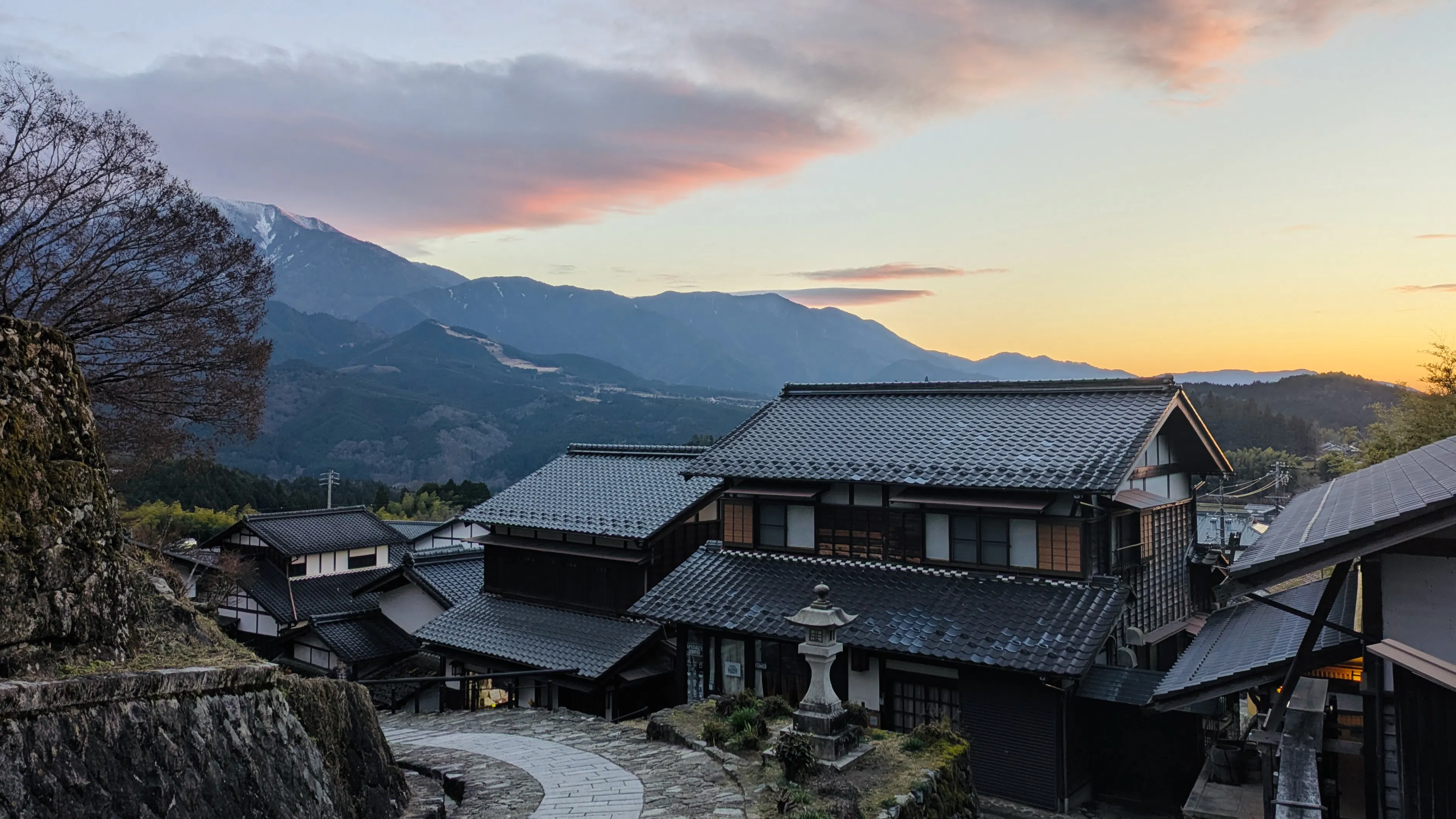
Sunset at Magome-juku


Along with Gujo Hachiman, Kiso Valley became the highlight of my Japan trip.
From Nagoya, I took the train to Nagiso, and set off along a section of the Old Nakasendo Trail — a historic Edo-period route that once connected Kyoto and Edo (modern-day Tokyo). For centuries, travellers, samurai, and merchants walked this very path, stopping in small post towns along the way. Today, parts of the trail have been beautifully preserved, allowing you to experience a slower, quieter side of Japan on foot. 🥾
The walk between Tsumago-juku and Magome-juku can be easily done in 3 hours, and is peaceful and incredibly scenic, winding through forests, past wooden houses, rice fields, and gentle mountain views. The post towns themselves feel wonderfully frozen in time — narrow stone streets, traditional wooden inns and soba shops, and a tranquility that settles in once the day-trippers leave.
I stayed at Sakanomichi, a lovely B&B in Magome with gorgeous views from the rooms and the sweetest hosts! Staying overnight in either Tsumago or Magome would be a special experience — as evening fell, the lanterns glowed softly and the day-trippers drifted away. Waking up to mist over the mountains the next morning, before everything stirred back to life, was just as memorable. 🫶🏻
On my second day, I continued from Magome to Nakatsugawa and then took the train back to Nagoya, although this section felt less scenic as it transitioned into a more urban setting.
👉 Read the more detailed guide on 2 days in Kiso Valley and walkin the Nakasendo Trail.
~~~

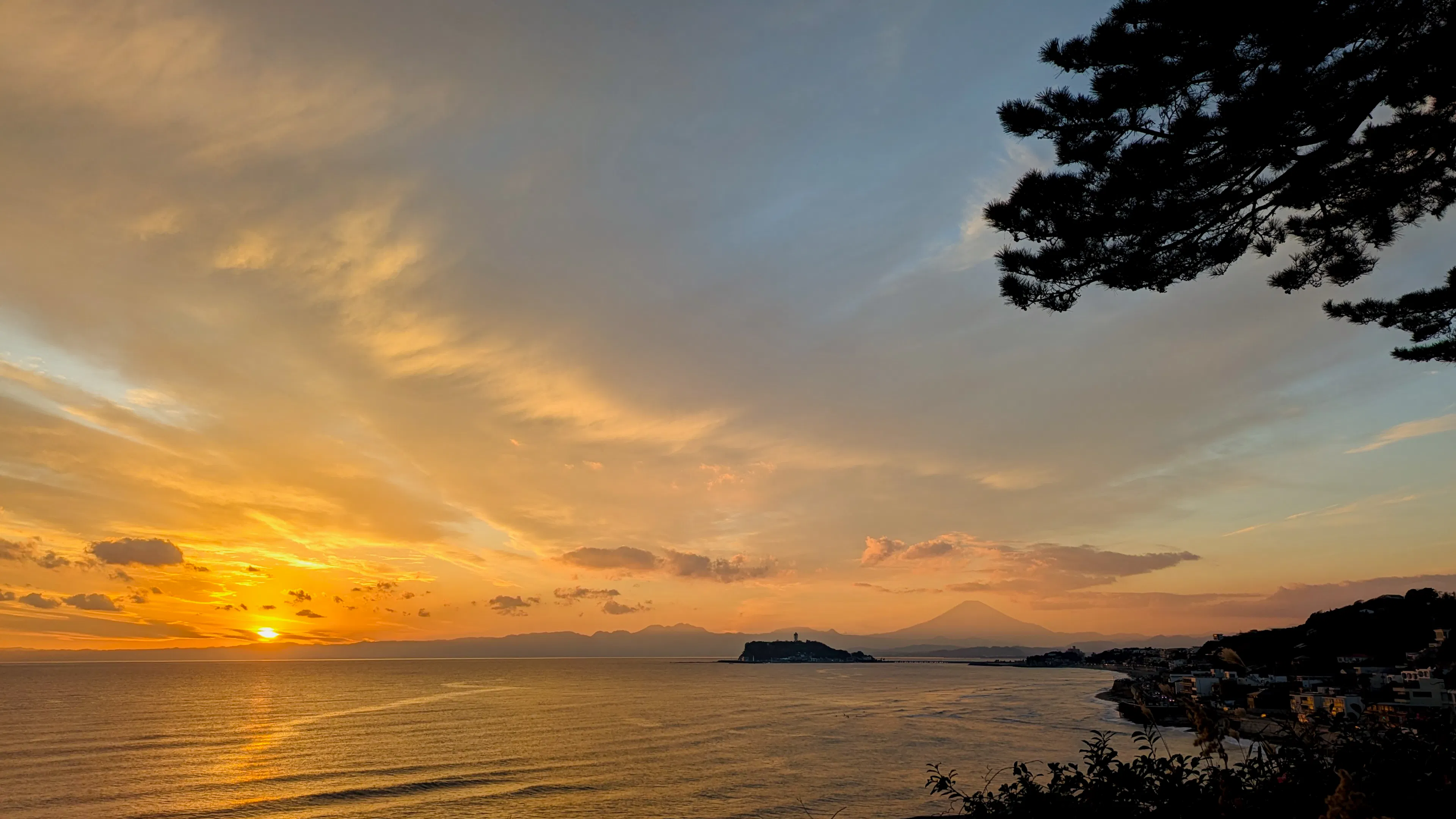
The most gorgeous sunset over Mt Fuji


I ended my journey in Kamakura, a laid-back town on the Shonan Coast blending temples, shrines, and outdoorsy seaside vibes. Only an hour from Tokyo by train, it’s perfect as a day trip — but with so much to see and do in the area, it also rewards an overnight or even longer stay.
The Shonan Coast also treated me to a most stunning Mt. Fuji sunset — truly magical and unforgettable! 🗻
Staying anywhere along the local Enoden Line is convenient for exploring most of the area’s highlights. If temples and shrines are your focus, Kamakura itself or nearby Hase are both great bases. I stayed at Kamakura Seizan, a relatively new hotel with beautiful minimalist design just a few minutes’ walk from Kamakura Station.
👉 Read the more detailed guide on 2 days in Kamakura.
~~~
Overall, this 2-week journey through Central Honshu offered the perfect mix of nature, mountains, temples, and quiet towns — from the snow monkeys of Nagano to the misty post towns of the Kiso Valley, and the coastal charm of Kamakura. Every stop combined adventure with moments of stillness, allowing for both exploration and recharge. Whether you’re into hiking, cycling, cultural immersion, or just soaking in stunning scenery, this itinerary highlights the very best of off-the-beaten-path Japan while still keeping it manageable.
I’ll be sharing more detailed guides for each destination — including hikes, accommodation tips, and logistics — but I hope this overview gives you inspiration to design a Japan trip that feels both meaningful and deeply personal. 🤍
~~~~~~