 Journey with Junyuan
JapanAsia
Nagano is where Japan feels wider, quieter, and closer to the mountains. Surrounded by the Japanese Alps, it’s a place of ancient temples, forest shrines, steaming onsen, and — in winter — snow monkeys soaking in hot springs. ♨️
This 3-day Nagano itinerary combines the city’s history with alpine scenery and some of the best things to do in the area — including one of Japan’s most atmospheric shrine walks, the Togakushi Kodo trail. ⛩️
Nagano is just 1.5 hours from Tokyo via the Hokuriku Shinkansen, making it an easy addition to a central Japan itinerary.
From Nagano Station, buses and trains connect you to:
The city works extremely well as a transport hub while still feeling calm and compact.
~~~
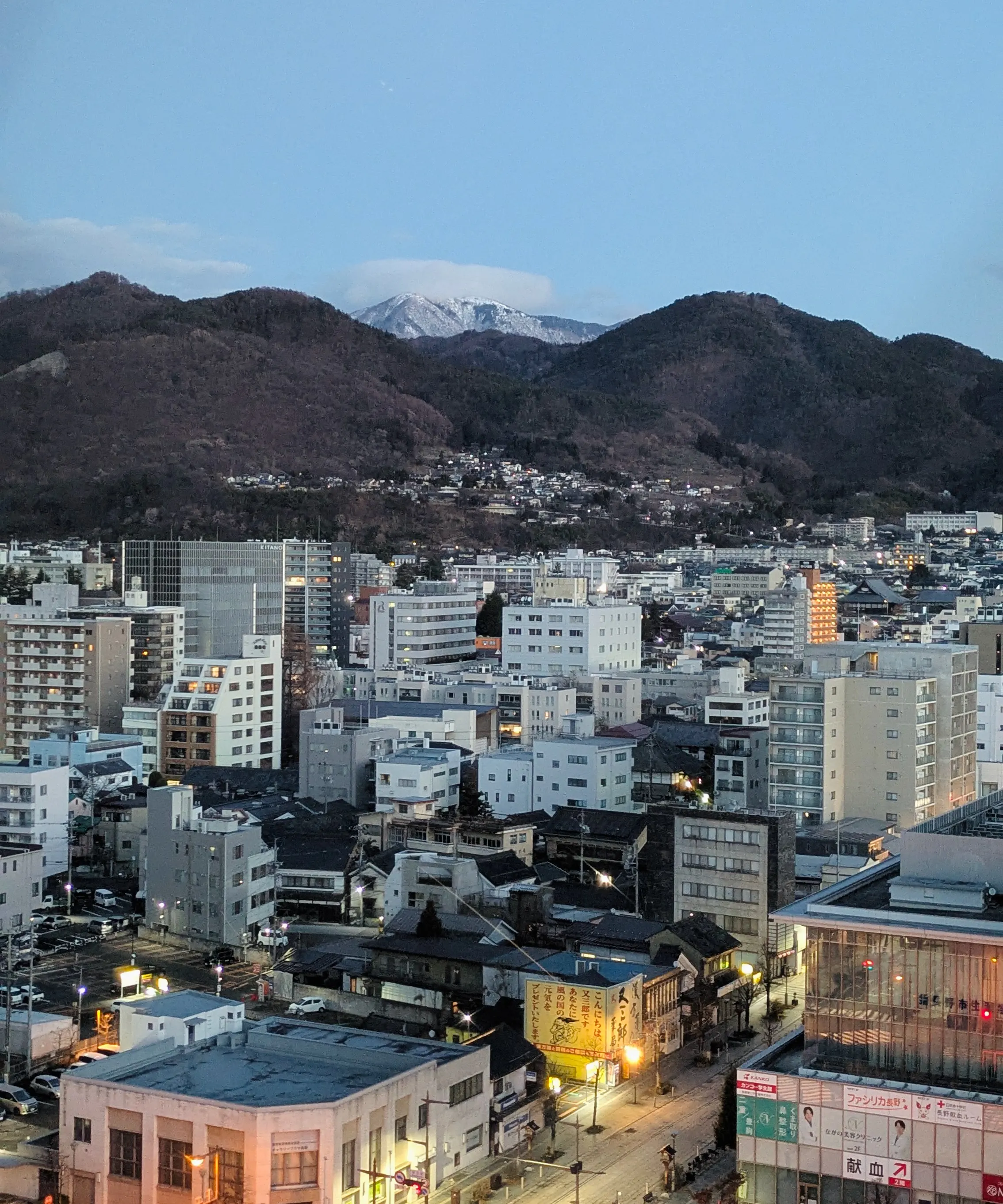
For this kind of itinerary, staying near Nagano Station makes the most sense. It gives you easy access to early buses for Togakushi or the snow monkeys, plus plenty of restaurant options in the evenings. I stayed at Hotel JAL City Nagano for 3 nights and loved it there. It's quiet while still being close to everything, but the absolute highlight is their delicious breakfast buffet on the top floor with 180° view of the Japanese Alps! 🗻
If you want one more atmospheric night, consider staying in Shibu Onsen or Yudanaka Onsen, both are near the Snow Monkey Park and have direct access via a local bus.
But overall, Nagano city works beautifully as a central base for exploring the wider region.
~~~

Snow monkeys living their best life!


Jigokudani Yaen Koen, home to the famous snow monkeys, is quite a popular tourist destination. So even in relatively quiet December, I started early to avoid the crowds. There are 2 options to get the Snow Monkey Park from Nagano:
With either option, you'll then need to walk 30 minutes to the park entrance. It's a scenic route through the forest. Hiking boots are recommended as the trail could get very muddy!
The Snow Monkey Park area itself is quite small, but you'll see loads of monkeys roaming freely and doing their monkey business. They're all so incredibly cute and fluffy! It was so cool seeing the macaques soaking in steaming hot springs against a snowy backdrop! They were really enjoying it and living their best onsen life. 🙈♨️
After the snow monkeys, continue on to Obuse, a small, charming town that makes a perfect half-day stop.
From Yudanaka Station, take the Nagano Dentetsu Line back toward Nagano and get off at Obuse Station (~20 minutes).
Obuse is known for:
It’s compact, walkable, and a lovely cultural contrast after a morning in the mountains.
Return to Nagano city in the late afternoon (about 30 minutes on the Nagano Dentetsu Line).
~~~

Cedar avenue leading to Togakushi Shrine


If there’s one experience that defines the Nagano region, it’s Togakushi.
About an hour from Nagano city, the Togakushi Shrine complex stretches across forested mountain slopes. The highlight is the path to Okusha (Upper Shrine) — a long cedar-lined avenue that feels almost mythical, especially in winter when snow muffles every sound.
The Togekushi Shrine can be easily reached by taking the Alpico Bus from Nagano Station (Zenko-ji Exit) to Togakushi Okusha (~60 minutes). As it's a popular destination, pre-booking a bus ticket for early morning is highly recommended.
You can:
🥾 Note: bring ice spikes for your shoes when visiting in winter as the path can be very icy and slippery! 🧊 There were definitely people who were struggling and falling due to inappropriate footwear.
Afterward, try Togakushi’s famous soba noodles, made with pure mountain water. There are some options around Chusha, though not all of then were open as Google Maps stated. 🍜
Back in Nagano city, visit Zenko-ji Temple, one of Japan’s oldest and most important Buddhist temples. 🪷
It can be easily reached by foot from Nagano Station within 30 mins. The wide approach street leading up to the temple is lined with small shops and snacks, and the main hall is beautifully atmospheric. If you’re curious, you can also try the underground Okaidan Meguri passage beneath the temple — walked entirely in darkness.
Zenko-ji works nicely as a city-based cultural balance after a morning in the mountains.
~~~
I only had 2 full days to explore the Nagano region before heading to Kanazawa, but I could easily stay for one more night for further exploration. For your final day, you could choose based on season and interests.
Matsumoto Castle is one of Japan’s most beautiful original castles, known for its striking black exterior and mountain backdrop.
You could take the JR Shinonoi Line from Nagano Station to Matsumoto Station, which roughly takes 1 hour. From there it'll be a 15-minute walk to the castle.
It’s an easy and rewarding day trip if you enjoy historic architecture.
If you’re visiting outside winter, Kamikochi is a spectacular alpine valley in the Northern Japanese Alps, known for turquoise rivers, wooden suspension bridges, and dramatic peaks.
⚠️ Note: Kamikochi is closed in winter (typically mid-November to mid-April).
There is a direct bus service from Nagano to Kamikochi with Alpico for about 2.5 hours.
If you are visiting Takayama later, there's also a shorter route to reach Kamikochi from there (~1.5 hour) via public transport. If you're willing to spend more money for some convenience, GetYourGuide also offers a full day tour from either Nagano or Takayama combined with other destinations such as the Shinhotaka Ropeway.
~~~

Torii Gate of Togakushi Okusha


3 days in Nagano offer a beautiful mix of wildlife, sacred forest trails, mountain towns, and cultural stops — all anchored by a relatively calm, manageable city base. ☺️
Rather than rushing between destinations, staying in Nagano allows you to explore the surrounding region at a relaxed pace: snow monkeys in the morning, chestnut sweets in the afternoon, cedar-lined shrine paths the next day, and alpine castles or valleys to finish.
If you’re building a central Japan itinerary and craving mountain air between bigger cities, Nagano fits in effortlessly. 🏔️
👉 Explore the complete 2-week Japan itinerary here
~~~~~~